
Why We Developed the EC700 Series
Designed for varied industrial loads, the EC700 combines flexible motor control, modular expansion and practical connectivity for OEM equipment.
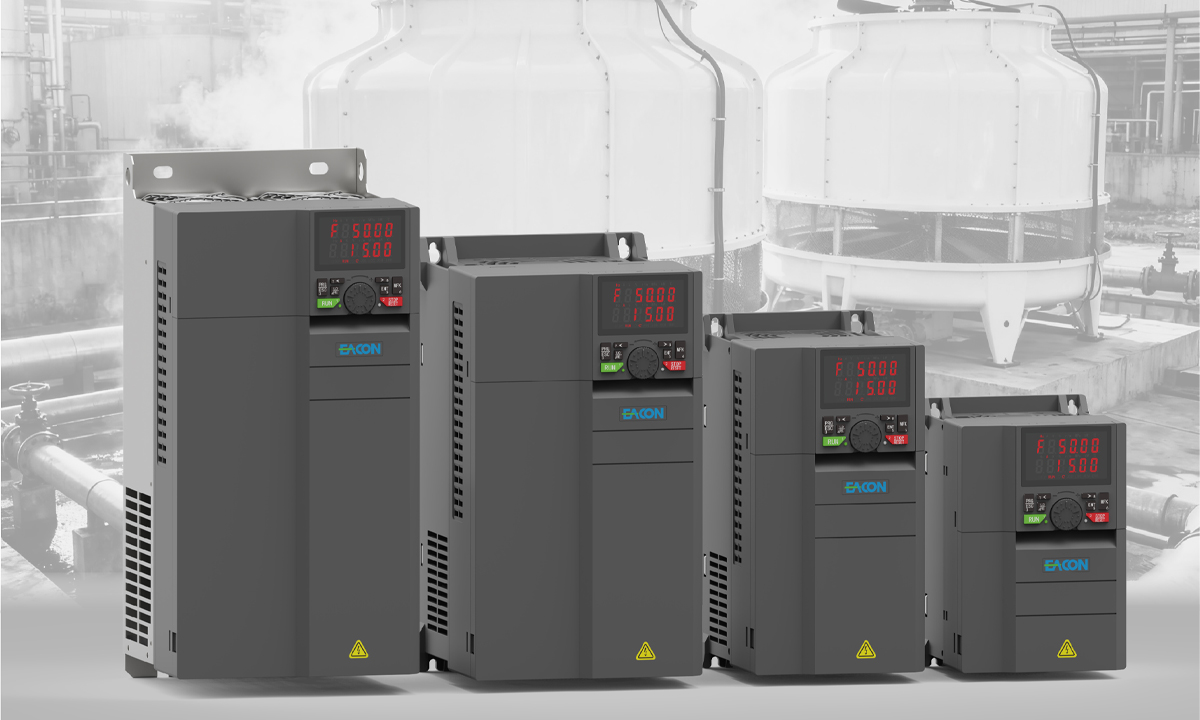
An industrial drive must do more than change motor speed. It needs to work with different loads, fit the machine design and give operators a clear way to set up and monitor the system. Those needs shaped the EC700 Series.
One platform for different motors and loads
OEM equipment can face very different operating conditions, even within the same production line. The EC700 supports V/F, sensorless vector control (SVC) and flux vector control (FVC) for induction and permanent-magnet motors. One-touch switching between motor-control functions gives engineers more flexibility when adapting a machine design.
Torque control and PID control extend the range of applications the drive can address. Built-in macro programs for fans and water pumps provide a starting point for common equipment configurations.
Designed for installation and daily operation
The series spans 0.4–400 kW for wall mounting, with through-wall mounting available from 0.4–37 kW. A detachable, hot-pluggable keypad supports parameter copying and RJ45 extension cables up to 30 m; double-line LED and LCD keypad options are available.
A built-in power and status indicator remains visible when the keypad is removed. Firmware updates over USB or serial connection, together with parameter access, status monitoring and fault tracing, are intended to make commissioning and service more practical.
Ready to connect with the wider control system
The EC700 provides a standard RS485 interface with Modbus RTU and supports PN and TCP/IP communication for networked monitoring and data exchange. It can be integrated with PLCs, HMIs and other automation devices.
Two expansion interfaces support optional I/O and communication modules, ABZ-PG cards and application-specific expansion cards. This modular approach lets equipment builders select the functions required for each project. Contact EACON to review the motor, load and integration requirements for your application.